
Upon creating a new show that would fill the “hole in entertainment” Marta Kauffman and Howard J. Morris set out to form a new series that would speak to an older audience. (Hollywood Reporter) Such a show hadn’t really been seen since the era of The Golden Girls, a show that audiences praise for its snappy comedy and feminine edge. Grace & Frankie further capitalize some of the topics presented in The Golden Girls such as the LGBTQ+ community, sexual expression and the pains of growing older. The advantage of Grace & Frankie however, is that they are able to dive deeper into these topics with two of its main characters (Sol and Robert) representing the LGBTQ+ community far more than Golden Girls had.
For the past five seasons, Grace & Frankie have kept fans like myself with tears of laughter. I can’t say another show has made me laugh quite as much as these two ladies have. A television veteran, Grace & Frankie co-creator Marta Kauffman has kept generations of audiences laughing for decades with having also co-created one of television’s most successful sitcoms, Friends. One of the contributing factors of the show’s success is witty dialogue and unwillingness to hold back barrier-breaking topics such as same sex marriage and sexual intimacy among elder generations. (Both of which are not talked about enough!)
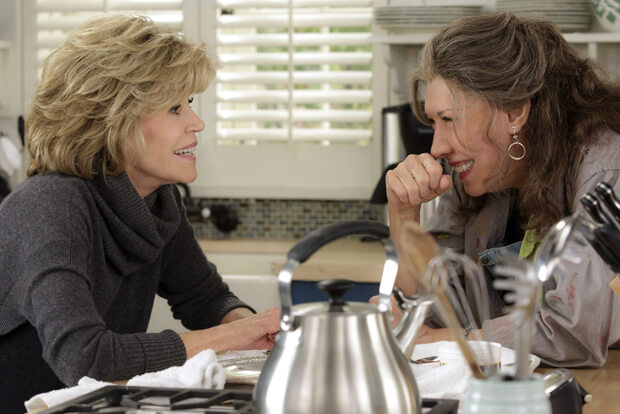
I believe as television continued to advance in the 1980s, 90s and into the 2000s, it allowed writers to be a bit more forthcoming about these deemed “taboo” topics. What’s amazing is that many networks and cable programming perceive these topics as just that, taboo. However, why should real-world topics be perceived as such? This is what makes Grace & Frankie one of my personal favorite shows. Any writer (or show for that matter) who is willing to represent a community too often unheard, is the kind of show I want to watch. While Kauffman was in search of a show that targeted the older generation, she was also surprised to find that younger generations became fans of the show for its honesty and ability to shed light on topics avoided by most programming. The younger audience was in fact, looking for real female role models that represented far more than just beauty, and through Grace & Frankie, they found them.
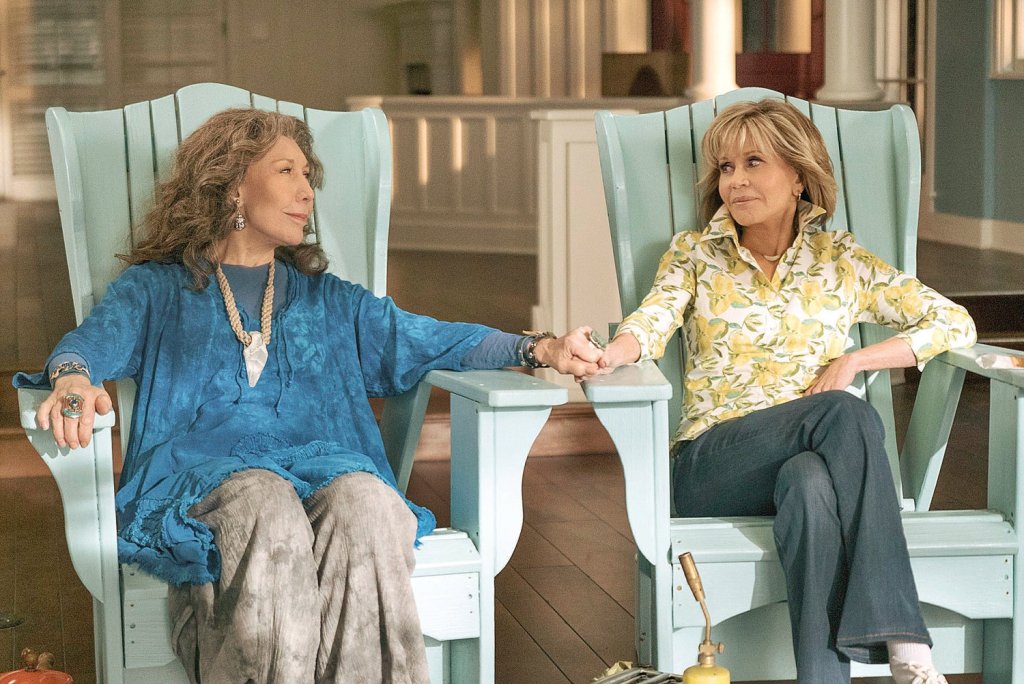
The show opens of course with the discovery that both Grace and Frankie’s husbands Sol and Robert have been in a twenty year affair with each other. The ladies must then transition from married life to being single in their 70’s for the very first time in nearly 40 years. While the ladies struggle with the separation, they form an unbreakable bond that leads them to seek love and purpose within their relationships, family and their joint business venture.
The Golden Girls touched on LGBTQ+ characters such as Dorothy’s friend Jean (who had a crush on Rose) but hadn’t introduced a series lead representing this community like Grace & Frankie was fortunate to. And who doesn’t love a good Sol and Robert scene? These two are vastly different in personality but together, form a dynamite duo. (Much like Grace and Frankie) Countless episodes continue to show the friendship Grace and Frankie form with Sol and Robert and I really enjoy how they have grown to get along and continue to display love for their former spouses. Making for more interesting dialogue than the typical bitter divorcees you often see on television. Robert and Sol’s marriage also represents the notion that it’s never too late to fall in love. If you haven’t seen the show, please do! It’s everything I believe modern television comedy should be; truthful, relatable, and undeniably funny.

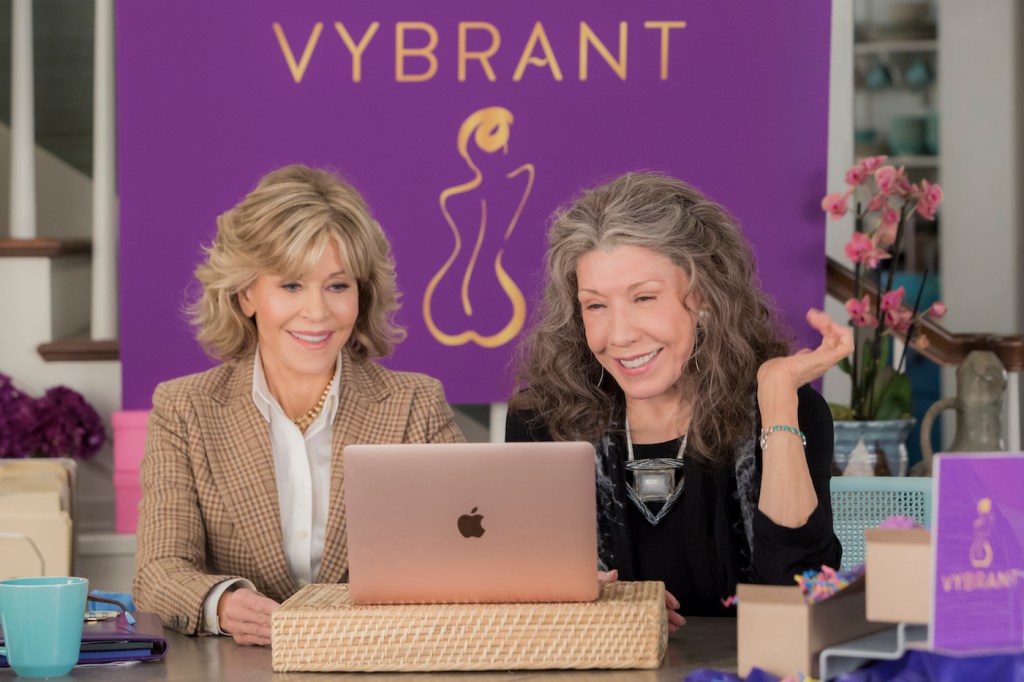
Grace and Frankie represent a female group far to often ignored with real world problems such as vaginal dryness, sex in your 70’s and proving you’re never to old to say “f–k it!” The series introduces Frankie’s yam lube then inspiring their future company ‘Vybrant’ which creates vibrators designed for older women. (yes, you read that correctly) Again, what makes this show undeniably honest yet hilarious, is its ability to have fun with these real world topics. Aging doesn’t have to be perceived as negative, it can open conversation for audiences who are experiencing these exact situations. I applaud the series writers for never straying from their original goal of the show and what it represents to all sorts of communities.
Lastly, one of my favorite episodes of the series is Season 4 Episode 13 where Grace and Frankie break out of Walden Villas (a retirement home) on a golf cart only to return to their beach house to discover it had been sold by their children. What makes this episode one of the best is its snappy comedy. Taking back what was once their home, Grace and Frankie learn that sometimes you just have to say “f–k it!” In doing so, they “squat” in the living room to prove that they’re reclaiming what is rightfully theirs and that old age is merely a construct. Many of times the ladies have proven that all they truly need is each other to survive. If you’ve seen the show, every season ends with a medium shot of Grace and Frankie on the beach discovering that despite life’s hurdles, they’re all they really need.

While The Golden Girls may have helped lay down the foundation in which Grace & Frankie have further developed, they are never-the-less a modern representation of the unconventional narrative life can sometimes hold. And in these turn of events, they discovered a new found friendship that would lead to sisterhood and an extraordinary business venture. Marta Kauffman and Howard J. Morris struck gold when pairing two of Hollywood’s funniest gals on one show; creating something that was inclusive, truthful and downright hilarious. I am proud to be a fan of Grace & Frankie as it has truly inspired myself as a filmmaker to strive to create a show of this caliber. I can’t wait to see what their upcoming sixth season, premiering in 2020 will hold!












 That’s A Wrap: Film Reviews